


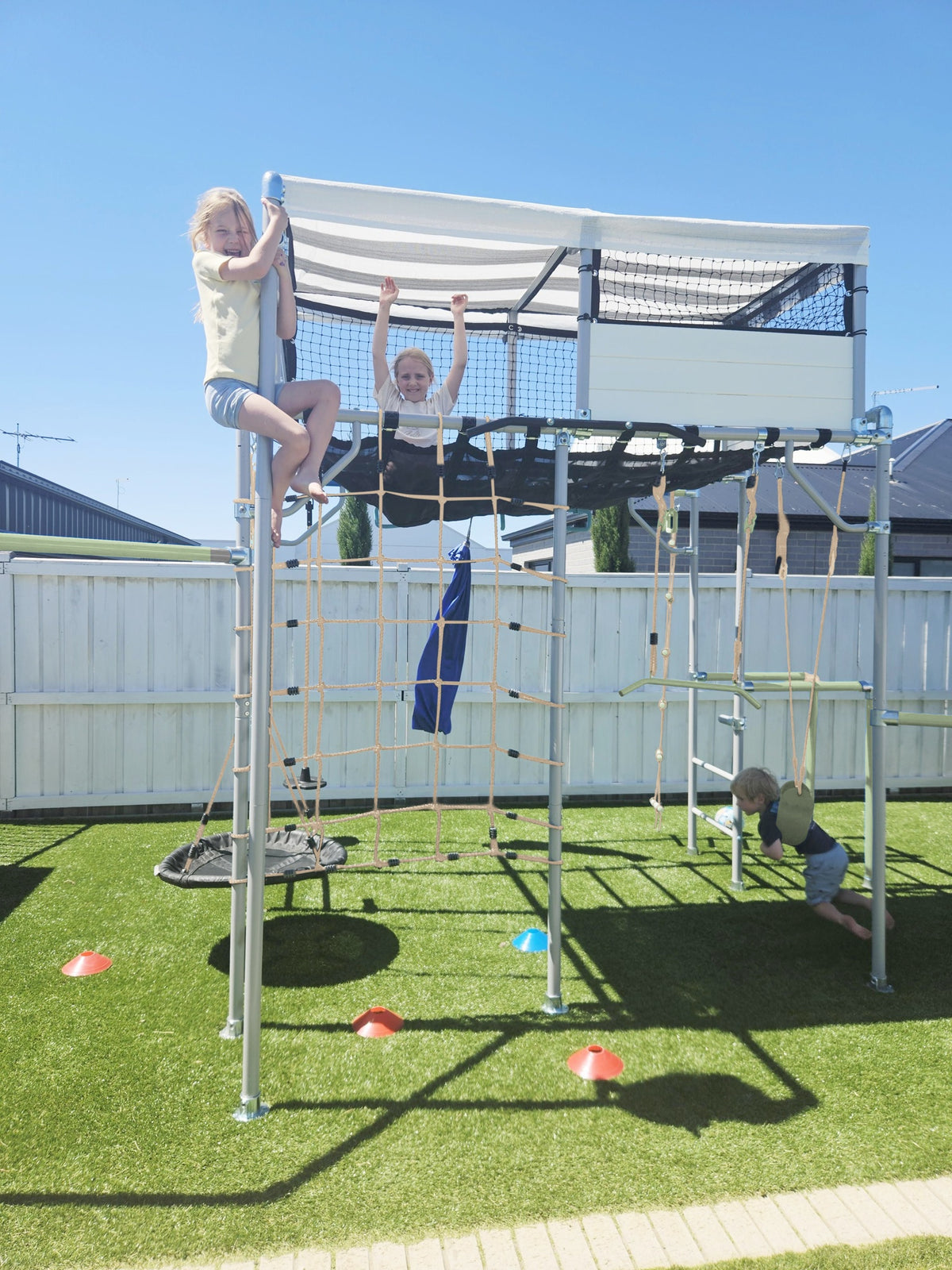
Every parent wants their kids to have fun outside, play actively, and spend less time on their devices. One solution is to invest in an outdoor play space. But here comes the dilemma. Is it safe for your kids? How hard is it to maintain the cubby house? And will it last long enough to get your money's worth?
A backyard cubby house does more than give your kids a place to go. It also encourages imagination and healthy physical activity, turning everyday play into an outdoor adventure. That alone is worth the investment, as long as you choose a cubby house that lasts for years.
In this article, let's find out:
- What trade-offs should parents weigh when considering a cubby house
- What are the developmental and health benefits of outdoor play
- What makes metal cubby houses, specifically powder-coated steel, the top option
- What other things do you need to consider when you're ready to buy
Every Parent's Dilemma
Ask any parent who's looking to get an outdoor cubby house, and they'll probably have more than just fun and games on their mind. Getting kids to enjoy outdoor play and willingly spend less time on their screens is often one of the reasons parents consider a cubby house in the first place. But then the practical questions start creeping in. Will it be safe when the kids really start getting rough? What about maintenance and upkeep? And can it withstand years of use?
With everything in mind, choosing the right material for the cubby house is the key. You want a cubby house that looks good not only on day one but also can withstand seasons of play.
Key Developmental and Health Benefits of Getting a Backyard Cubby House
Encouraging Imagination and Creative Play
A backyard cubby house is like a blank slate for your kids. It can be a secret hideout, a clubhouse, a castle, or the starting point for all kinds of backyard adventures. As long as your kids can imagine it, the possibilities keep changing, giving them more opportunities to create new games, make up stories, and explore, improving their creativity. As they come up with new ways to use the same space, they learn to think beyond what is right in front of them and come up with ideas of their own.
Promoting Physical Activity and Movement
A cubby house isn't just a place for pretend play; it also gives kids plenty of reasons to move around. They can climb across the monkey bars, make their way up the ladders, swing from the ropes, crawl through the play areas, and use the different parts of the structure as they move from one activity to the next. All that climbing, balancing, and moving builds muscles and coordination, turning playtime into enjoyable exercise.
Building Social and Problem-Solving Skills
Creative thinking aside, there's also a lot of critical and logical thinking that goes into playing outdoors. Kids have to figure out how to get from one part of the cubby house to another, decide how to organise their games, and work out what to do when things don't go according to plan. Decision-making becomes part of the fun as they work things out for themselves, make choices, and adjust when something doesn't work.
Encouraging More Social Play
A cubby house is always better shared. When friends or siblings jump in on the fun, everyone has to decide who gets to play what role, take turns, share the space, and agree on what game to play. During playtime, not everyone will always be on the same page. These little disagreements teach kids how to compromise. Along the way, they learn to listen to others, communicate their ideas, and work together to keep the fun going.
Reducing Screen Time
Every parent wants their kids to experience outdoor fun. With an outdoor metal cubby house, kids will willingly choose to trade their screen time for cubby house fun. Instead of being told to put their devices away, they have something exciting to look forward to outside. Plus, it's a great way for the whole family to enjoy a little digital detox while getting some sunlight and fresh air.
What Actually Matters When Buying a Cubby House
Choosing a cubby house isn't just about finding one that looks good in your backyard. So before you make your choice, here are a few things worth considering:
- Material first - When it comes to cubby houses, you've got a few options, namely wood, plastic, and metal. Wood can splinter, bend, and warp, so it needs regular staining. Plastic is better in terms of maintenance, but it can still become brittle and fade, looking worn out. Metal, especially galvanised, powder-coated steel, excels in maintenance and durability. It doesn't rot or splinter, and a simple wipe-down usually does the trick. The added material cost is worth it if you consider how long it holds up over several seasons.
- Anchoring - No matter how strong the material you choose, if it's not well anchored, it can still come down in strong winds or rough play. For this reason, consider what anchoring system the cubby house will use. There are also playgrounds that support no-concrete systems with galvanised ground anchors if you don't want to dig footings.
- Certified safety - Safety is always a priority, no matter the product. Look for products that pass recognised safety standards and are properly tested for children's use. Always prefer smooth, non-toxic finishes and rounded edges.
- Room to Grow - Kids grow up fast. And their cubby house should too. With a modular design, you can customise their playspace to meet their growing needs and interests. In the long run, it's a better investment than a fixed design that your kids might outgrow.
- Compatibility - Consider whether the cubby can connect with monkey bars or swing sets.
Helpful next steps
Summary
Bringing in a cubby house can offer a range of benefits for your kids, from improving creativity and social skills to building brains and brawn. But aside from providing outdoor fun, you also need to consider material quality, upkeep, and safety. Among the options, metal frames and accessories, especially powder-coated, top plastic and wood in terms of ease of maintenance and durability.
Growplay's Cubby House is a good example of how these features can come together in one outdoor play system. It uses a galvanised steel frame with powder-coated aluminium wall panels, along with a cargo-net entrance and fireman pole for plenty of ways to get in and out. The Cubby House is designed to attach to the Large and XL monkey bar frames, giving you the flexibility to build on the system as your kids grow and their interests change.


